Wednesday, June 3, 2009

The WSB Scouting Chronicles, Day One

Someone recently lamented birding competitions like the World Series of Birding can be so impersonal: you hear about "the team," then you hear a final number, and if you search, a species list. What you don't hear are the details of the human experience, how those species were added, and how others were missed. Those stories are arguably the most interesting part of a Big Day. Though I can't offer all the details on what happened on the Big Day I can highlight some tales from the scouting trail.

06 May 2009, Milford, PA
I pulled into Milford right at 6:00 PM. After fitting a full work week into two-and-a-half days I could now shift my focus to helping the Sapsuckers scout the northern New Jersey counties for the Big Day competition, which kicked off in a mere 54 hours.

First problem: where was everyone?

The others arrived in Jersey between the Sunday and Tuesday before the Big Day. Priorities change minute by minute so the plan was for me to call the other northern scouts when I left Ithaca to find out the latest. As I headed south on I-81 former Sapsucker captain Ken Rosenberg (Director of Conservation Science), debuting in an advisory role, relayed the birds he was listening to in the Delaware Water Gap as we talked.

"When you arrive - Cerulean - at the motel, why don't you - Worm-eating - give a call - Blackburnian - and we'll figure - another Cerulean - out where to send you." Giddiness kicked in, I pressed the accelerator a bit harder. For someone who birds sporadically and briefly, immersing myself into solid birding for two days of spring migration was going to be heaven.

When I arrived at the Milford Motel the clerk had no idea who I was, and more importantly had no reservation for me. I started to wonder if I should be in Milford, NJ instead of Milford, PA, though the NJ one is a bit far south for where I'd be scouting. Eventually it all worked out, I was in the right place, now I just needed for someone to get back into cell phone range. Rather than wait in a lonely motel room I crossed the Delaware River into New Jersey to re-visit my old stomping grounds. I'd scouted Sussex county extensively between 2000 - 2004, and I was anxious to see what changed.

Not much, it turned out. Really, everything looked familiar. The soundscape was subdued, the evening chorus quiet compared to what the morning would bring. This evening held a Hermit Thrush's song here, a Blue-headed Vireo's there, but mostly quiet. I finally got word to meet the crew at the Sussex Queen Diner at 8:00 PM for the daily debriefing and to receive scouting assignments. Almost an afterthought, we could grab a bite, too.

Because of the way roads are laid out in this area it's a slow, winding meandering to get anywhere in Sussex county. I stopped at a small marsh in High Point State Park to listen for anything interesting. I verified a Yellow Warbler singing its secondary song, one that mimics a Chestnut-sided Warbler, while cars blew past the turn off. When one turned in I guessed it would be another WSB-affiliated birder. Birders from all teams are crawling all over the northern counties, concentrating on a target areas. Much like a fall out of songbirds in a patch of good habitat, you can get congregations of birders at these hotspots.

I was right. The car stopped, and there was Ken. Not just any WSB-affiliated birder, but the one I was looking for. We caught up for a few moments, then headed off independently for a couple last minute checks before meeting at the diner. Ken sent me to a small wetland to find out if any marsh birds were calling, he followed up on a report of needed birds at a different marsh. His site was a bust, I couldn't find my site at all. Using the New York DeLorme to get around northern NJ might not be a good idea.

Thirty minutes later I walked into the diner. Current Sapsuckers Marshall Iliff (eBird Project Leader) and Tim Lenz (eBird programmer) were poring over their NJ atlases, Ken highlighting historic territories of some much-needed species. Lewis Grove (fellow scout, flight-call researcher), was relaying his experiences from the day to Sapsucker Andrew Farnsworth (project leader on flight-call research and terrestrial acoustic monitoring). All looked somewhat frazzled, and it was only Wednesday.

Cloud-covered moon over New JerseyClouds rolled in covering a near, but not quite, full moon.
Unfortunately, they brought rain. A lot of rain.


Over dinner the Sapsuckers explained the strategy they were planning for this year and where some key birds were staked out. Around 9:30 I headed out for my evening assignment: visit three sites known to have Northern Saw-whet Owls, listening for any spontaneous calling. Saw-whets are certainly present in NJ in May, but whether they'll call during the time allotted for a stop is always questionable.

Given I just had to stand quietly and listen it was a relatively easy evening. The hard part was standing in a steady downpour, at times torrential, listening from the narrow shoulder of the road. Traffic was minimal, but each time a car approached my mind wandered to every horror story and urban legend I ever heard. I recalled a disproportionate number of them that take place on rainy nights on isolated roads.

The rain let up a bit at my second stop, where I parked and hiked in to the site. It was startlingly black, no town lights, street lights, headlights; no moon or stars. Half a mile later I didn't hear any owls, probably because no owls called, possibly due to a loss of hearing when I crossed a wetland full of Spring Peepers. The third stop was equally unproductive for owls, but helped me reorient myself to some sites I'd be visiting again in daylight hours for different birds.

When I returned to Milford (PA) it was nearly midnight. I reviewed my plan for the next morning, which would start by listening for Ruffed Grouse at 5:30, a perfectly reasonable time of the morning. Previous years started much earlier. The extra sleep would be welcome.

-

Tuesday, June 2, 2009

New Blog on the Block: Earbirding

earbirding.com header

In the "this just in" department, via Bill Schmoker at Brdpics, comes a new blog that promises to be not only interesting, but cutting edge: Earbirding.com. The blog's author, Nathan Pieplow, not only takes birding by ear to new levels, but revisits old levels and clarifies them. Or at least prompts discussions to try to. Friends, Romans, and Countrymen, lend him your ears at Earbirding.com.

-

Monday, June 1, 2009

Collecting vs. Reporting

The theme in my life, both at work and on the homefront, is that collecting always outpaces processing. Does anyone find themselves finished with everything and nothing left to work with? At work we're extremely proficient at collecting sound recordings, but we lag behind in our ability to analyze and interpret those recordings (something we're working on).

At home, I'm extremely proficient at collecting experiences with birds and nature along with photos, but I lag way behind in processing and contextualizing them into blogworthy accounts. (Twitter seems like a world I should adopt, as it takes way less than 148 seconds to post a 148 character tweet. Alas, brevity is not my strong suite.).

So, I owe, I owe, I'll be blogging soon again I know. In the meantime, here are a few shots I've collected from the past few weeks. Oh, and check out a guest post I wrote for "Puerto Rico Month" on 10000Birds.com. (Note to self: quite giving away blog posts to other sites . . . ).

Black-capped Chickadee nesting in Paper BirchBlack-capped Chickadees nesting in an American White Birch (Betula papyrifera) snag.


Grasshopper SparrowA Grasshopper Sparrow surveys his territory, if he can hold on to it.


Common YellowthroatA male Common Yellowthroat attempts to attract a mate.


Dark-eyed JuncoA Dark-eyed Junco taking a break from feeding nestlings.


Cedar WaxwingA Cedar Waxwing keeps a wary eye on an intruder (me).

-

Monday, May 18, 2009

Did You Know?

On May 18, 1929, a Song Sparrow, Rose-breasted Grosbeak, and House Wren made history as they sang. Their songs were captured in the first-ever audio recordings of North American birds. The Fox-Case Movietone Corporation preserved the songs on film using an optical technique to record sound waves, with help from Cornell Lab of Ornithology founder Arthur Allen and colleague Peter Paul Kellogg in Ithaca, New York's Stewart Park.

Read the full story and hear the songs at All About Birds.

-

Tuesday, May 12, 2009

I Came, I Saw, I Scouted: Wrapping up the World Series

The World Series of Birding (WSB) is more than a birding competition. Well, at its basest level it is merely a contest to see which team can observe the most bird species in a single day within the state of New Jersey.

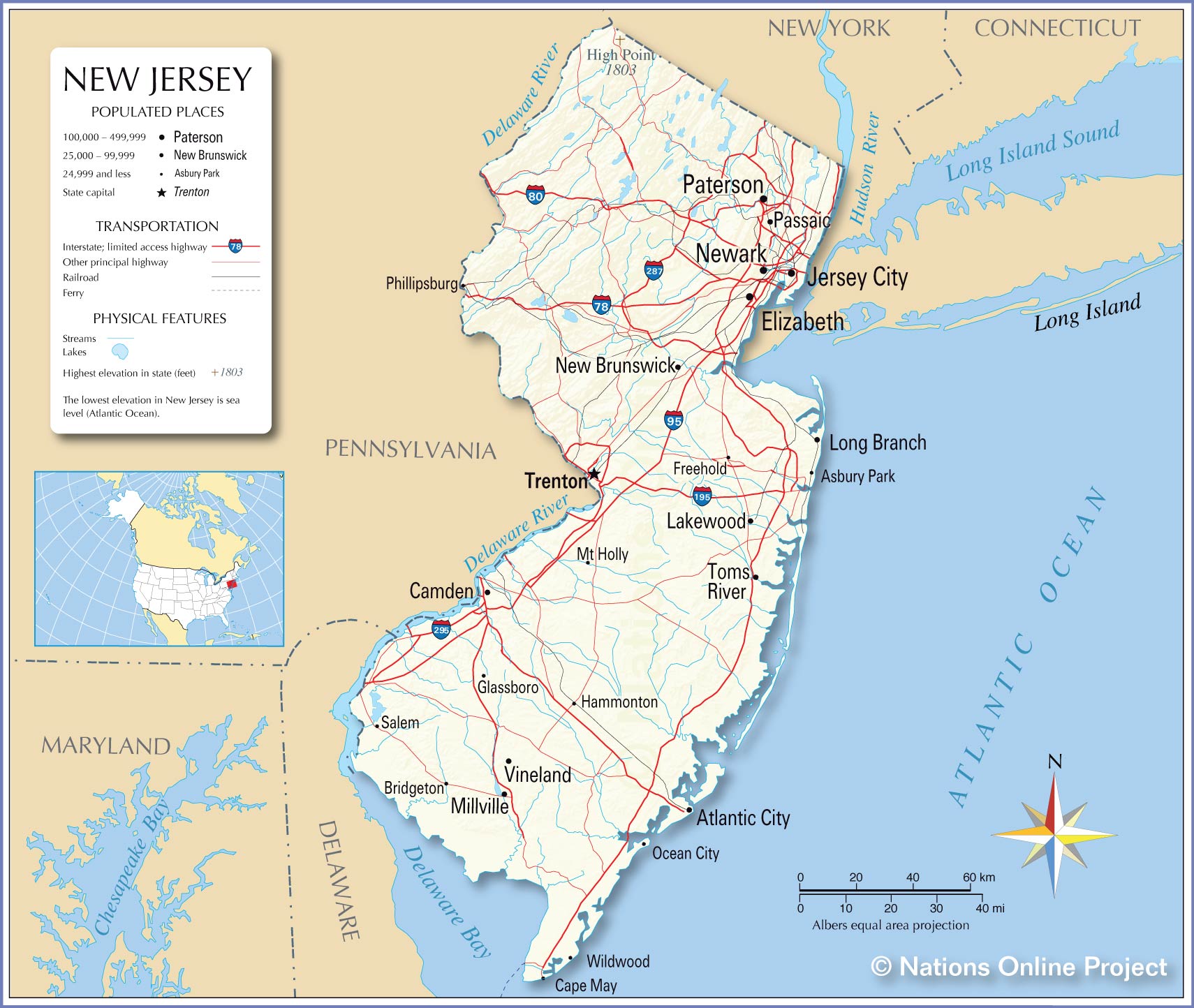
New Jersey, map courtesy of Nations Online ProjectIt's a small state, but I wouldn't want to paint it. Birding it is fine.
Map courtesy of Nations Online Project.

Dig deeper and it's a pretty daunting undertaking requiring stamina, knowledge, and more than a little strategery. Developing a strategy that allows you to find 220-plus species is mind bending, a task that employs all the little grey cells you possess. Managing your time diligently requires discipline envied by the most pious of Buddhist monks (if Buddhist monks were given to envy). The extended sleep deprivation and malnutrition would make David Blaine weep. And the skills to identify all of those birds, some by sounds less than a half-second long or by a profile on the edge of visibility, takes the eidetic memory of a Good Will Hunting. And in spite of, or because of, those factors, it really is fun.

I guess -- I didn't actually compete. When you work at the Cornell Lab of Ornithology, a place with dozens of world-class birders, you can bet only the best of the best are invited to join the Sapsuckers. But I can tell you this: it's flattering to be asked to give up a few days of computer work to travel to the wilds of Jersey to help the team scout.

Dawn in High Point State ParkI'm not being facetious when I say "the wilds." Northwestern New Jersey
contradicts the strip-mall-covered and urbanized stereotypes from movies.


Scouting is an essential part of the competition. It turns out you can't just show up and expect to make a 200 species-plus run through the state. I mean, you can have that expectation, but it's a bit naive. You'd be fooling yourself. There is a lot of preparation involved in tracking every bird in the state and determining how to visit them all, or at least one of each species. It means studying New Jersey, committing to memory the variety of habitats throughout the state, then coupling that knowledge with a thorough understanding of which birds use those habitats. Then, couple that with the phenology of bird movements -- when are those birds are actually in Jersey? When do the snowbirds head north, when do the neotrops return? Oh, and remember, you only have a single 24-hour period, so you need to know the best time of day to find them.

Black-throated Blue Warbler, maleMany Black-throated Blue Warblers pass through the state, but some breed.
You have to know where if you want to be sure to add them to your list.

That's why you scout. The mission, which I chose to accept: descend on New Jersey and stake out as many birds as you can.

So, what do you stake out? Ideally, everything. Some birds you simply shouldn't worry about. American Robin, drive by any lawn and there you go! American Crow? C'mon. They're everywhere. Northern Cardinal? Please, missing these guys is impossible, right?

Blue-headed Vireo nestFinding a Blue-headed Vireo nest may be the difference between
adding this species for the day or missing it altogether.


But there's a lesson many teams have learned over the years: take nothing for granted. What if it's pouring rain and no bird is calling? How do you efficiently find birds that were singing loudly a day or two before, but are hunkered down and silent? You don't have time to traipse through the woods looking for them, hoping to cross paths. You need to know precisely where to look. And even if it is amiable weather, you need to know what time to be at each location. Birds aren't signing all day; when does each species start? When do they quiet down? What locations are active early, which ones come alive late? It pays to know when the birds are most active, singing and calling without restraint.

Canada WarblerCanada Warblers often return to New Jersey shortly before the Big Day.
Visiting their territories lets you know exactly when they return.


I had some specific tasks, I had some general assignments. The weather was a mixed bag. I listened for saw-whet owls in the pouring rain, I watched migrant warblers in a sunny park. I spent hours by myself, not coming in contact with another person. I fought traffic on the Jersey Turnpike and sought much-needed birds in the middle of Newark. I had some successes and some complete failures. All of that information, merged with reports from other scouts, was fed to the Sapsuckers who incorporated it into their Big Day strategy.

More on the day-to-day activities of a scout to come, but how did it all work out for the Sapsuckers? The "tweet" came in on Sunday morning at 12:07 AM (you know I was still up, anxiously awaiting the results): their final tally was 221 species. I'd have to wait until late Sunday morning to hear how that stacked up against the other teams. Pretty well, it turned out, but not well enough to win.

More to come . . . .

-

Tuesday, May 5, 2009

Gone Birding: World Series of Birding

As of tomorrow I'll be out of the office, offline, and out of touch for a couple of days. My waking hours, and some sleeping hours, will be spent scouting for the Cornell Lab's "Sapsuckers" as they ready themselves for the 26th annual World Series of Birding (yes, there's a Wikipedia entry for it, how mainstream!).

I scouted for the Sapsuckers between 2000 and 2004, always in the wilds of northern New Jersey, and I'm excited to be going back again. I'm not being facetious, the northwest corner is absolutely beautiful. I happily spent many (many, many) hours walking many (many, many) miles through High Point State Park, the Delaware Water Gap, and various unnamed areas trying to pick out a bit of everything: lingering winter species (Dark-eyed Junco, White-throated Sparrow), returning breeding birds on territory (Canada Warbler, Black-throated Blue, Ceruleans . . . ), nests of any kind but especially species that are likely to be proverbially "too quiet" on the Big Day (raptors, woodpeckers, early-nesting songbirds like Blue-headed Vireo), habitat patches that look ready to host a flock of migrating songbirds, the timing of when the pheasant calls, the Vesper Sparrow sings, and so on and so on.

You know, the usual Big Day requirements.


Palm WarblerPalm Warbler - will any be left in New Jersey on the Big Day?

It's always a challenge to describe what a big day is, particularly the Big Day, to non-birders -- for a f'rinstance, check out team-member Brian Sullivan's "World Series of What?" Birdscope article from a few years ago. Regardless of whether people "get it" or find it "quaint" (among other affectionate terms), I'm glad the contest has come to highlight conservation issues. The Cornell Lab takes pledges and the money raised is put towards conservation programs, such as atlas projects focusing on species like Cerulean and Golden-winged Warblers.

Blue-headed VireoBlue-headed Vireos will certainly be present, but will they be counted?

If you care to pitch in, please visit my donation page, and thanks in advance for your contribution. And on the Big Day please throw some good vibes the Sapsucker's way, they're on target to raise $200K for conservation again this year. And if you're into the social networking scene, follow them on their Twitter page throughout the week and especially during the event.

-

Monday, May 4, 2009

New at The Cornell Lab: Inside Birding and A New Neighbor

Something new on the revamped All About Birds website: Inside Birding, a video series hosted by renowned birders, and Cornell Lab staffers, Chris Wood and Jessie Barry.

Whether you’re new to birding or a seasoned expert, interested in sharpening your identification skills or wondering how to clean your binoculars, you’ve come to the right place.


On Inside Birding, hosts Chris Wood and Jessie Barry share all of the tools, tips, and techniques that will allow you to start birding like the pros. From where and when to find birds, to the clues that will help you identify them, Inside Birding provides the information that you need to make the most of your birding experience. So check it out and take your birding to the next level.


Check out the first few episodes on the Inside Birding website.

Jumping out the virtual world and back into the real one, we have new residents moving into the Sapsucker Woods neighborhood. A pair of Great Blue Herons spent much of today fashioning a stick nest in the middle of Sapsucker Woods. The snag sits in the middle of Sapsucker Woods Pond and often serves as a perch for Osprey, hawks, Red-winged Blackbirds . . . too many to list, really. It even hosted a Western Kingbird, nearly a decade ago when I first started working at the Lab.

Friday morning a pair of herons was observed "being amorous" on the snag, the male offering the female a long, multi-pronged branch, which she placed on the snag. Today, Monday, the birds were in full nest-building mode, it seemed the male flying in with a new stick every few minutes. He transferred them to the female who placed it on what seems as stable as a deck of cards: one wrong move, the whole thing comes tumbling down.

The male watches as the female places a stick. I'm no
architect, but I'm thinking vertical isn't the best orientation.


I spent a few minutes towards the end of the day watching what promises to be a fascinating breeding season. Here is a sequence of shots of a stick transfer, click on an image for a larger image to see the details.

The male heron arrives with a suitable stick for the nest. In the
background USAir flight 4685 arrives (early) from LaGuardia.


The male heron transfers the stick to the
female, who accepts it in a bowing posture.


The female heron places the stick in the nest as the male watches, then . . .


. . . the male is off to find yet another stick.

To be continued . . . .

-
Locations of visitors to this page